The Harvest: Where Community Meets the Vineyard
October 2025
Harvest season is when the vineyard truly comes alive. After months of tending vines, monitoring fruit development, and watching the grapes ripen, there’s that moment when everything aligns. The sugar levels are perfect, the acidity is balanced, and the weather cooperates. That’s when we invite people to join us for one of our favorite traditions: harvest.
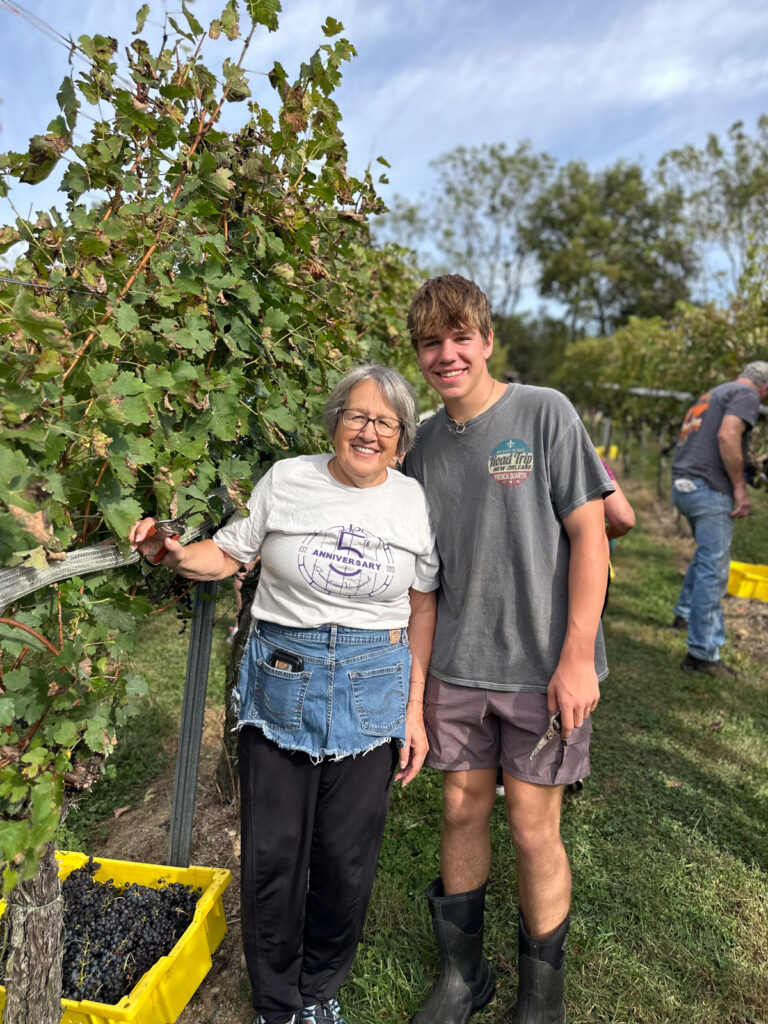
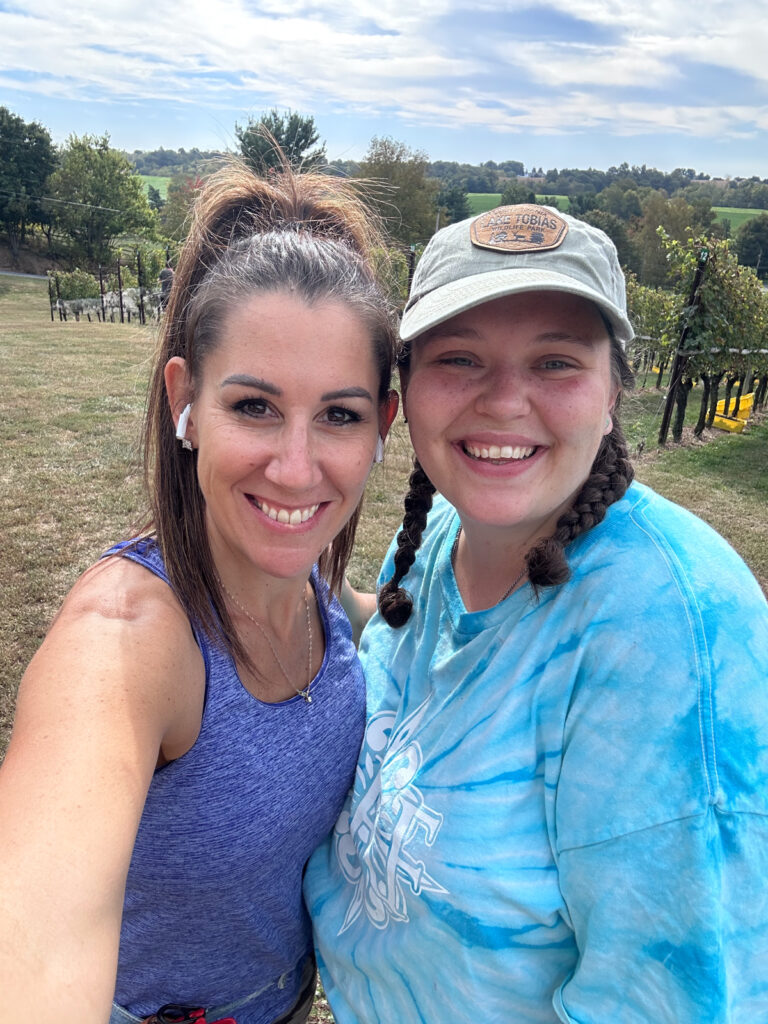
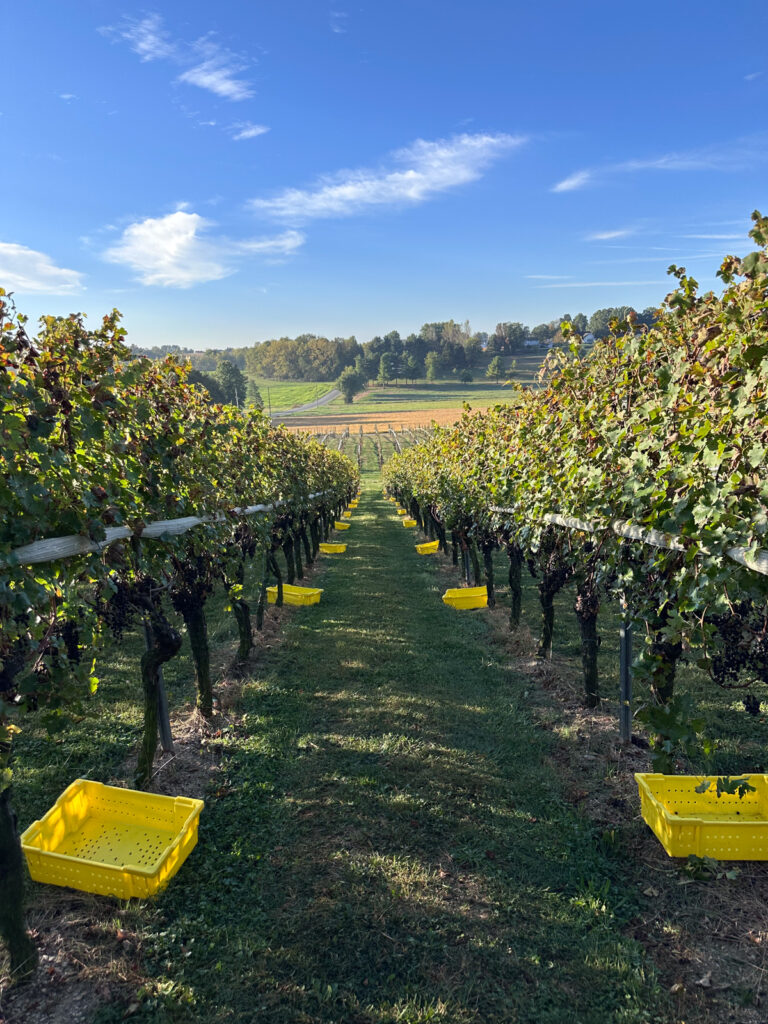
This past week, our Cabernet Franc grapes were ready. We sent out the call to our community, and within hours, the roster reflected familiar names and new faces. Some people have picked with us for years. Others were experiencing their first harvest. Each showed up ready to be part of something most wine drinkers never get to see firsthand.
Hands in the Dirt (and on the Vines)
Harvest day starts early. By the time volunteers arrive, we’ve already done our final checks—confirmed the grapes are at peak ripeness, rolled up nets and set up the harvest bins. After a quick training session over donuts and coffee, everyone heads into the rows.
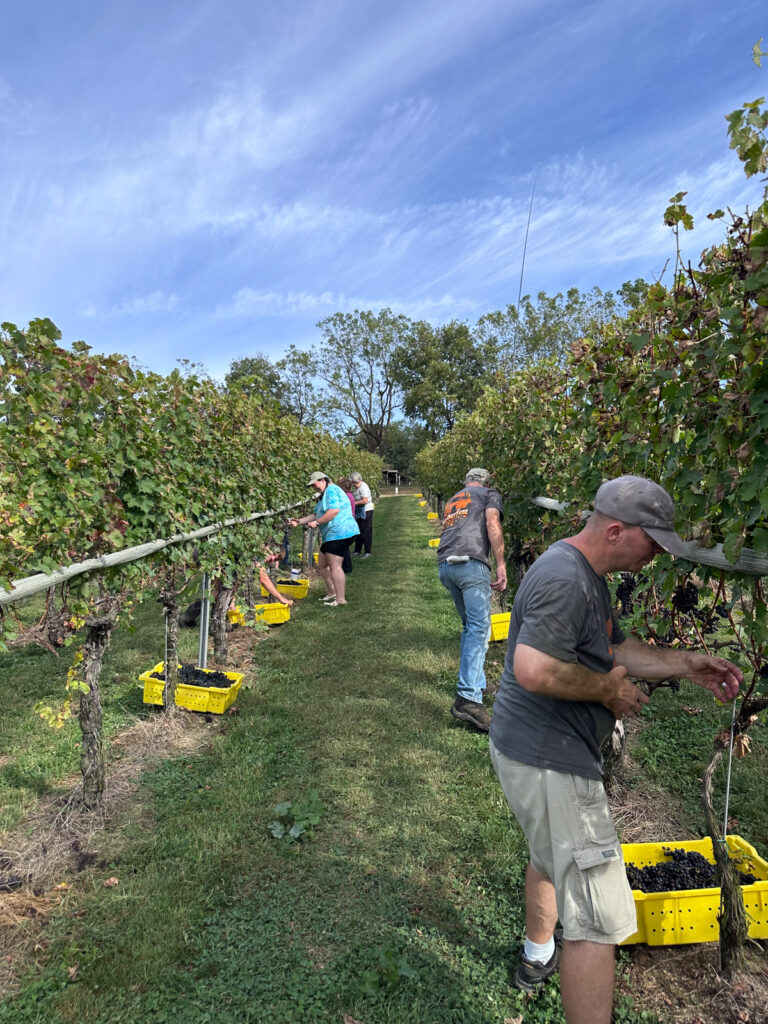
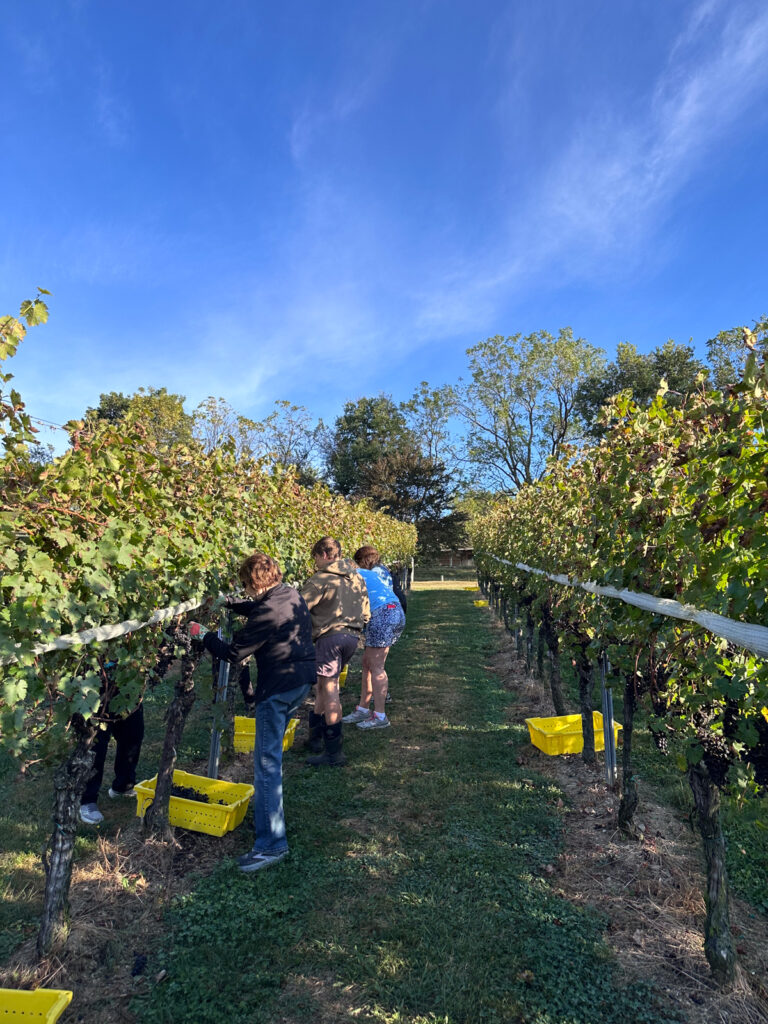
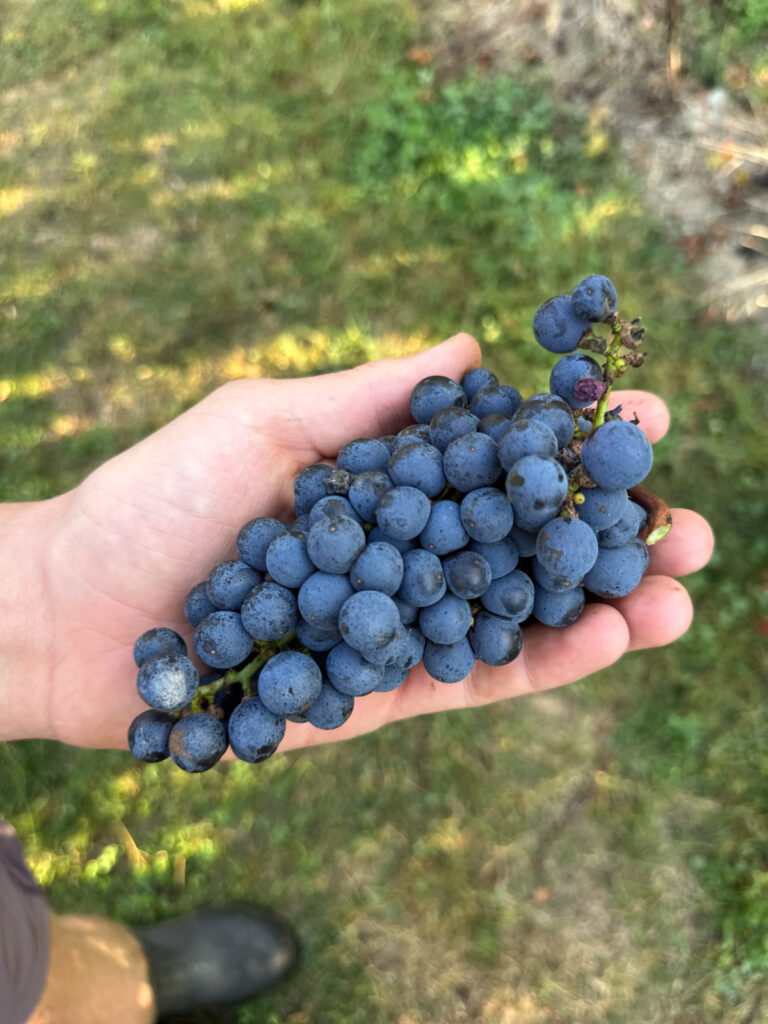
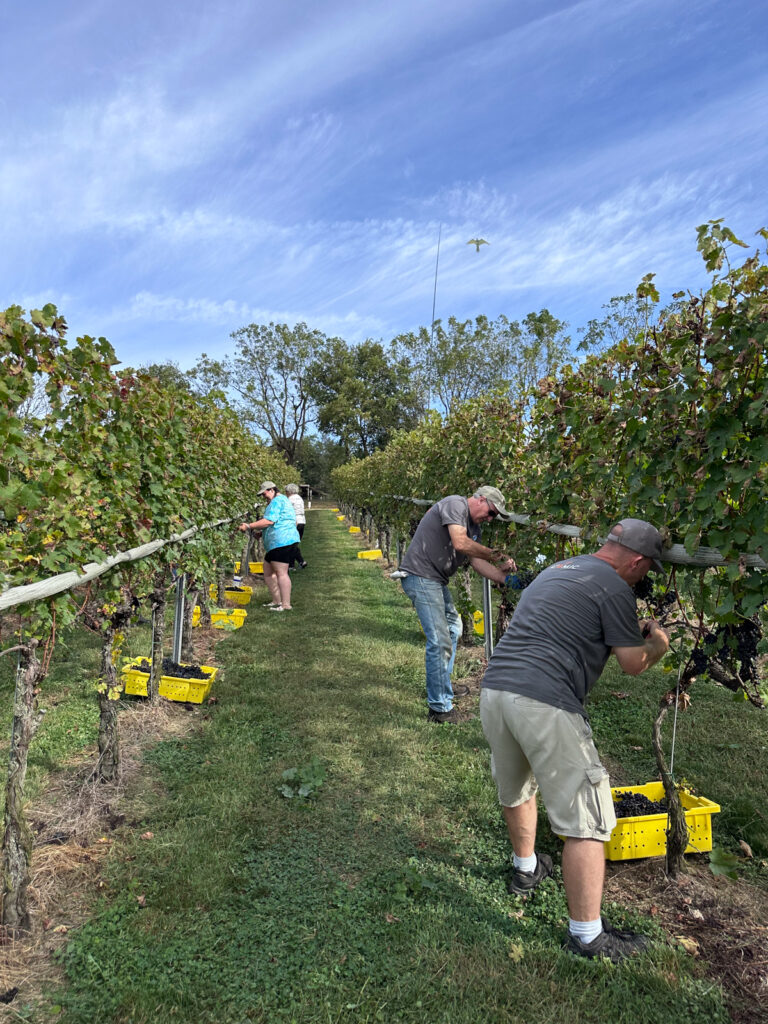
Hand-harvesting is honest work. You’re outside, moving between the vines, cutting clusters, and carefully placing them in bins. It’s repetitive but rhythmic. There’s something satisfying about each cluster cut being one step closer to becoming the wine that will bear this vintage year.
The real magic happens between the rows. Conversations start naturally, stories get shared, and strangers become friends somewhere between the third and fourth bin. Regular volunteers catch up on what’s happened since the last harvest. First-timers ask questions about winemaking, the vineyard, and what happens to these grapes next.
Why Hand-Harvesting Matters
We choose to hand-harvest for one simple reason: control. Machines can’t differentiate between perfect clusters and ones that should stay on the vine. They can’t leave behind damaged or underripe fruit, or clusters damaged by birds. Human hands can.
Every grape that makes it into our press is there because our team decided it met our standards. That level of selectivity is what allows us to produce wines with the complexity and character we’re known for. It’s also what makes harvest a community effort rather than a mechanical process.
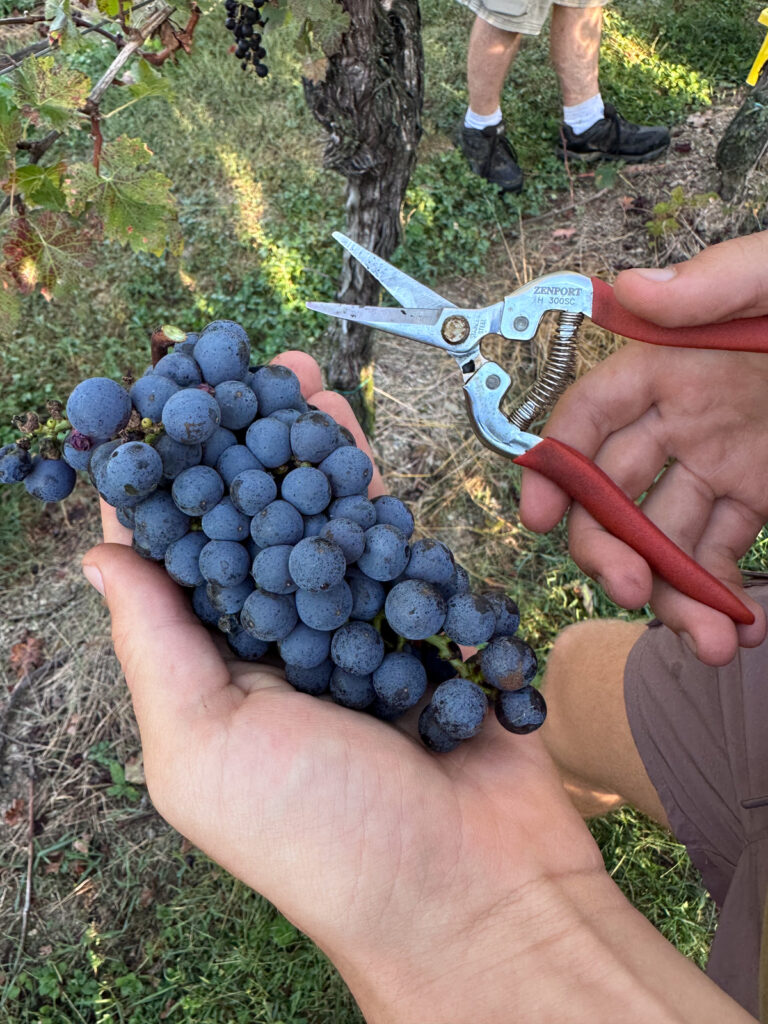
Our volunteers understand this. They take pride in selecting the best clusters, in being part of the process that determines what this vintage will become. Honestly, having fifteen people working together transforms what could be days of grueling work into a few hours of productive, enjoyable labor. Many hands make for light work!
The Lunch Table
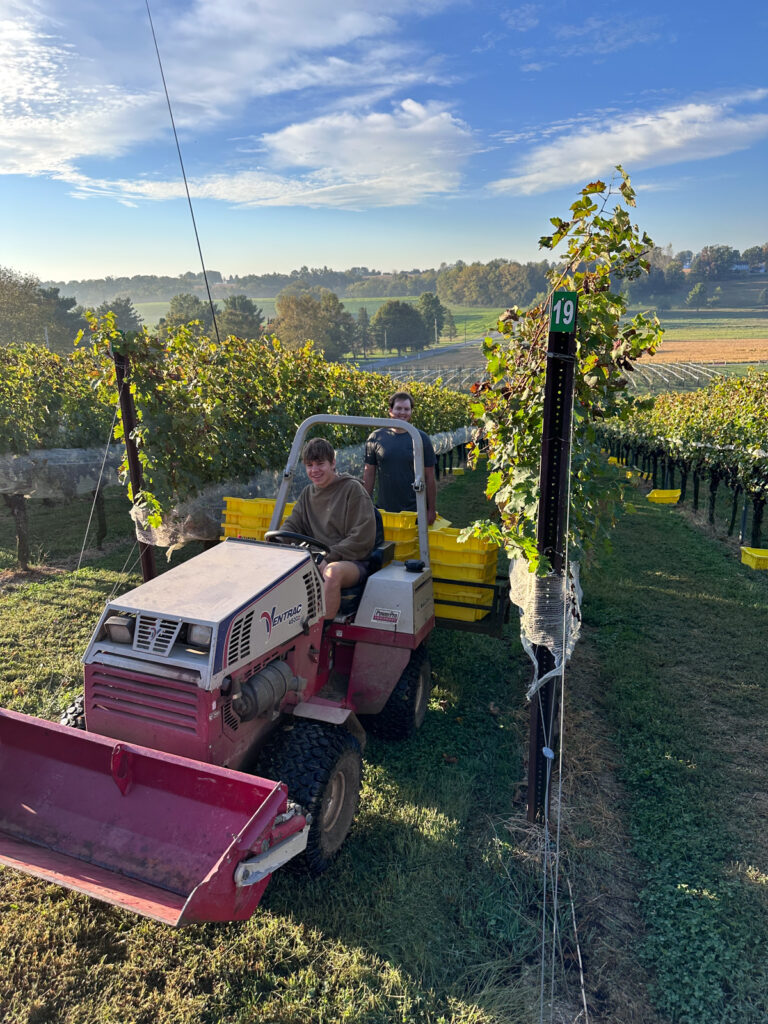
By late morning on the 2nd day of picking, both the Cabernet Franc and the Cabernet Sauvignon is picked! Bins full of grapes are already making their way up to the winery, where Scott will begin testing and processing them. The volunteers, meanwhile, gather on the deck for lunch.
This is when the morning’s work shifts into celebration and connection. People who spent hours bent over vines are now sitting together, sharing a meal and wine from a previous year’s harvest. The bottle each volunteer takes home isn’t just a thank-you; it’s a direct link to the work they just completed. In this case, our last vintage of Cabernet Sauvignon in their hands while this year’s harvest sits waiting to be processed.
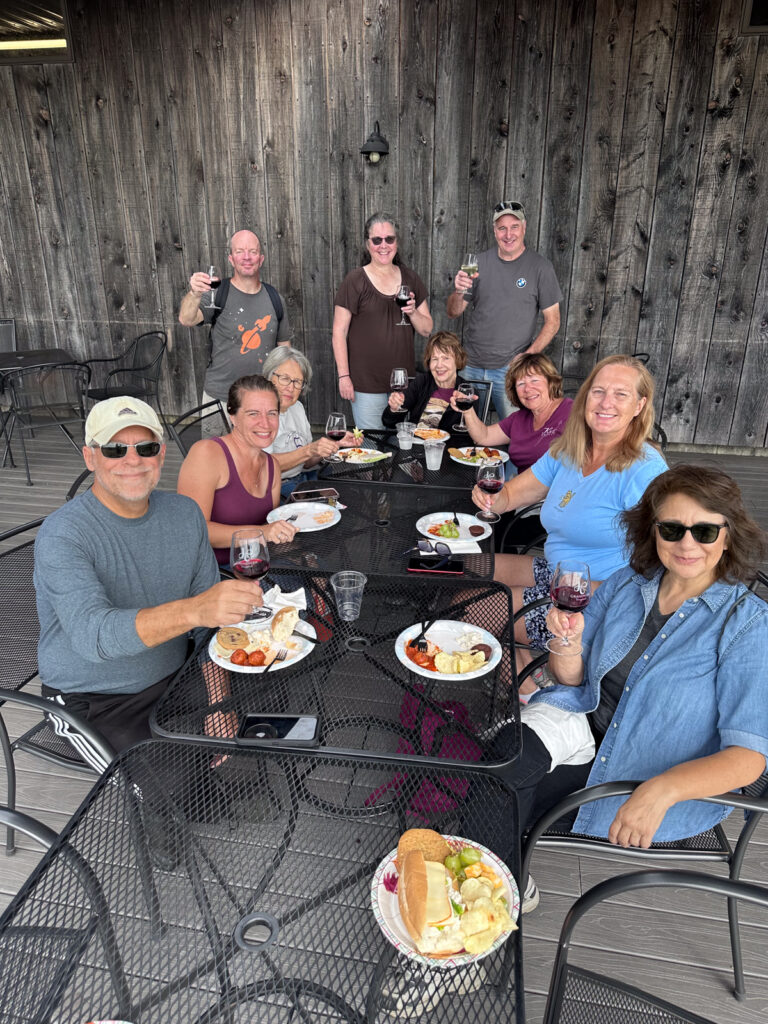
The lunch conversations are different from the ones in the vineyard. People ask deeper questions about fermentation, barrel aging, and blending. They talk about life and share some of the coolest stories. They start to see wine not as a finished product but as the result of countless decisions made over years. They leave understanding why we’re so particular about every step of the process, but also with a deeper love for every glass shared.
What Happens Next
After our volunteers head home, our work continues. The Cabernet needs immediate attention. The grapes will soon go through a destemmer, yeast will be added, fermentation and press-downs will begin.
This harvest won’t be ready to drink for at least two and a half years. The wine will spend nearly two years in French oak barrels, developing the depth and structure our estate reds are known for. Only after the first year of aging will we determine whether this Cabernet becomes a standalone varietal, part of a blend like Crimson Quartette, or, if everything aligns perfectly, a component of a future Grande Rouge, like the one we just released.
That’s what makes winemaking so compelling. Every harvest is an investment in the future. We do everything possible to ensure quality, but ultimately, nature has the final say. The grapes dictate readiness. The weather sets our timeline. And the wine reveals its true character only after years of patience.
Be Part of the Next Harvest
Harvest happens fast. Grapes don’t wait for perfect scheduling. When they’re ready, we put out the call on social media, and slots fill quickly. If you’ve ever been curious about what goes into making wine, harvest is a chance to find out! Although harvest is over for this year, be sure to keep your eye out for our next harvest season in September 2026.
Show up early, work hard for a few hours, and leave with more than just a bottle of wine. You’ll leave knowing you were part of creating something that won’t be ready for years but will carry the mark of this season, this harvest, and the people who made it happen.
We love sharing harvest with our community. It reminds us why we started this vineyard in the first place: to create exceptional wine while building connections that last well beyond a single vintage.
Want to join a future harvest? Follow us on social media for announcements when grapes are ready to pick. Volunteers who pick through lunch receive a bottle of wine from the previous year’s harvest of the same varietal.